
NB
Back to projects
Onlyone logo

Onlyone, eco-responsible banking, Paris

From transactions to climate insight

Onlyone Eco Coach

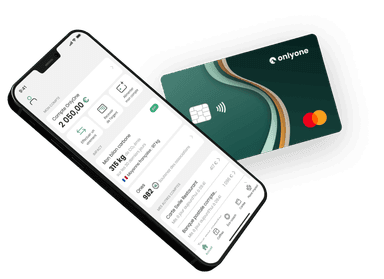
As Lead Data Scientist at Onlyone, I designed and productionized the Eco Coach, a suite of ML models that estimate the carbon footprint of every banking transaction, coach users toward more ethical consumption, and surface actionable insights directly in the mobile app.

The context

Onlyone is a fintech offering eco-responsible banking solutions. Users see their spending every day, but rarely understand its environmental impact. The Eco Coach bridges that gap, turning raw transaction data into personalized carbon insights, recommendations, and goals, powered by models deployed as ML APIs on Google Cloud Platform.

The challenge

Bank transactions alone carry little environmental signal: a payment at a retailer says nothing about the product bought, its supply chain, or its carbon intensity. Building a credible coach required profiling users, enriching sparse data with reference databases, and delivering explanations users could actually trust, not a black-box score.

  • No product-level detail in standard banking transaction feeds
  • Carbon reference data (ADEME) structured differently from merchant categories
  • Need for personalized, actionable recommendations, not generic eco tips
  • Mobile-first delivery requiring low-latency, production-grade ML APIs

Reference databases

Official carbon data used to ground transaction-level estimates.

  • ADEME

    ADEME

    French emission factors for goods, services, and transport, matched to each transaction via similarity algorithms.

What I built

End-to-end data science capabilities, from carbon estimation to ethical recommendations, forecasting, and explainable scoring.

  • Transaction carbon footprint

    Estimates the carbon impact of each banking transaction by profiling users, clustering spending patterns with ML, computing group-level averages, and matching transactions to the ADEME reference database via similarity algorithms.

  • Ethical consumption recommendations

    Content-based filtering engine that suggests ethical alternatives in context, e.g. when a user shops at a fast-fashion retailer, the app proposes sustainable textile brands aligned with their profile and budget.

  • Spending breakdown & statistics

    Interactive dashboards and in-app views breaking down expenses by category, merchant, and carbon intensity, giving users a clear picture of where their money and their footprint go.

  • Expense forecasting

    Time-series models forecasting future spending and carbon trajectories, helping users anticipate trends and adjust habits before month-end.

  • Ethical choice simulation

    What-if scenarios comparing the carbon cost of lifestyle choices (car vs. train vs. plane, conventional vs. ethical brands), to make trade-offs tangible and intuitive.

  • Personalized goals

    ML-estimated reduction targets tailored to each user's spending profile and historical progress, realistic objectives that adapt as behavior evolves.

  • Anomaly detection

    Flags unusual high-carbon spending spikes, sudden shifts to fast fashion or other carbon-intensive habits, and gradual "ecological profile drift", surfacing changes users might not notice themselves.

  • Multidimensional eco score

    A composite score built from multiple user variables, spending mix, category trends, goal progress, with interpretable model outputs and concrete recommendations to improve it.

  • Transparent explanations

    No black-box features: every classification comes with a reason, why a transaction is flagged as high impact, how the CO₂ equivalent is calculated, and intuitive comparisons like "equivalent to X km by car" or "X meals."

  • User segmentation

    Unsupervised clustering identifying behavioral archetypes (fast-fashion consumers, low-carbon commuters, occasional flyers), to personalize coaching strategies and benchmark users against peers.

In production

Models deployed as FastAPI and Flask services on GCP, integrated into Onlyone's mobile app and internal analytics stack, used daily by end users making real spending decisions.

  • Daily user engagement

    Carbon insights and recommendations surfaced at the moment of purchase, turning passive banking into active eco coaching.

  • Carbon literacy

    Users understand not just how much they spend, but what it costs the planet, with comparisons that make abstract CO₂ figures relatable.

  • Self-service coaching

    Simulations, goals, and forecasts let users explore their own path to lower impact without depending on manual analysis.

  • Production ML on GCP

    Models served via APIs with monitoring and versioning, designed for the reliability and latency constraints of a live mobile product.

Tech stack

Python ML models, FastAPI and Flask APIs on GCP, BigQuery data layer, Tableau for analytics, GitLab CI/CD

GCPBigQueryPythonFastAPIFlaskTableauGitLab CI/CD

The Eco Coach turned Onlyone's transaction feed into a credible climate companion, personalized, explainable, and production-ready, giving users the tools to align their spending with their values.